A parking platform that connects software with real-world movement.
A multi-interface automated parking ecosystem designed across resident mobile app, kiosk, admin HMI, backend, simulator, RFID, and PLC-ready workflows.
- ROLE
- System design, application architecture & implementation
- STACK
- Flutter, NestJS, Postgres, Next.js & hardware-ready integration thinking
- STATUS
- Advanced case study, not publicly deployed
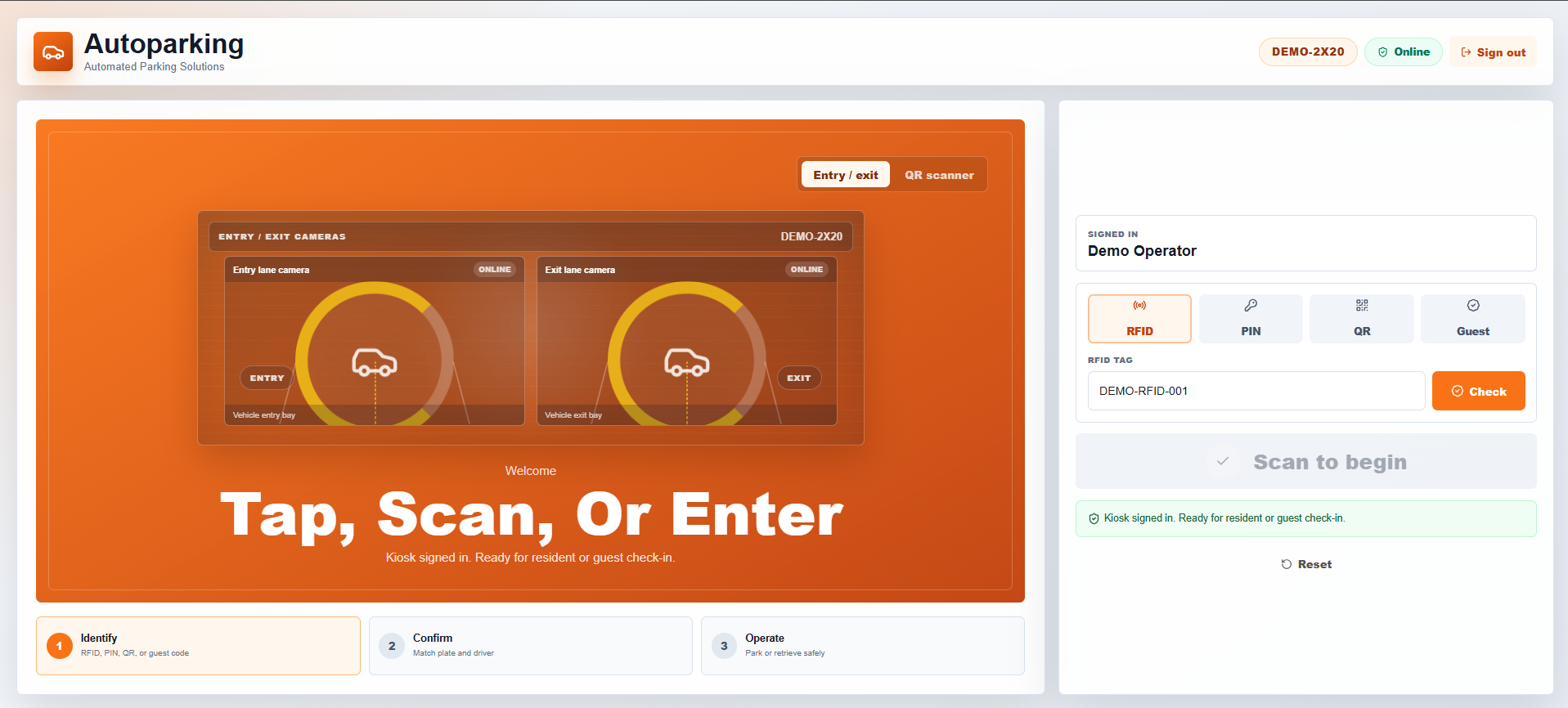
Parking software is not one screen. It is a coordinated operating system.
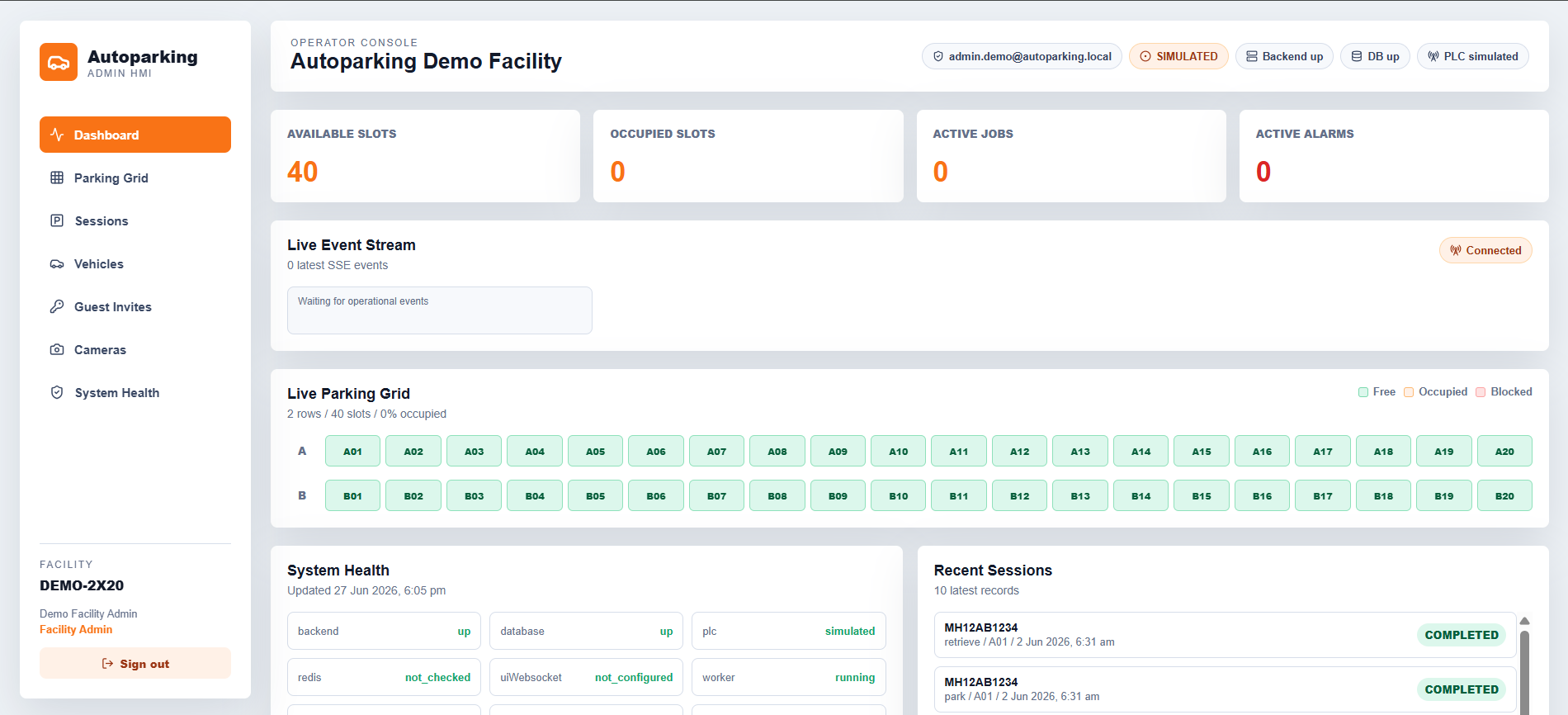
Automated parking needs multiple users and surfaces to work together: residents, guests, kiosk operators, admins, vehicles, slots, sessions, cameras, alarms, and system health.
The software architecture was planned around that reality — separating user-facing flows from operator controls while keeping the whole system visible to administrators.
Every interface has a different job.
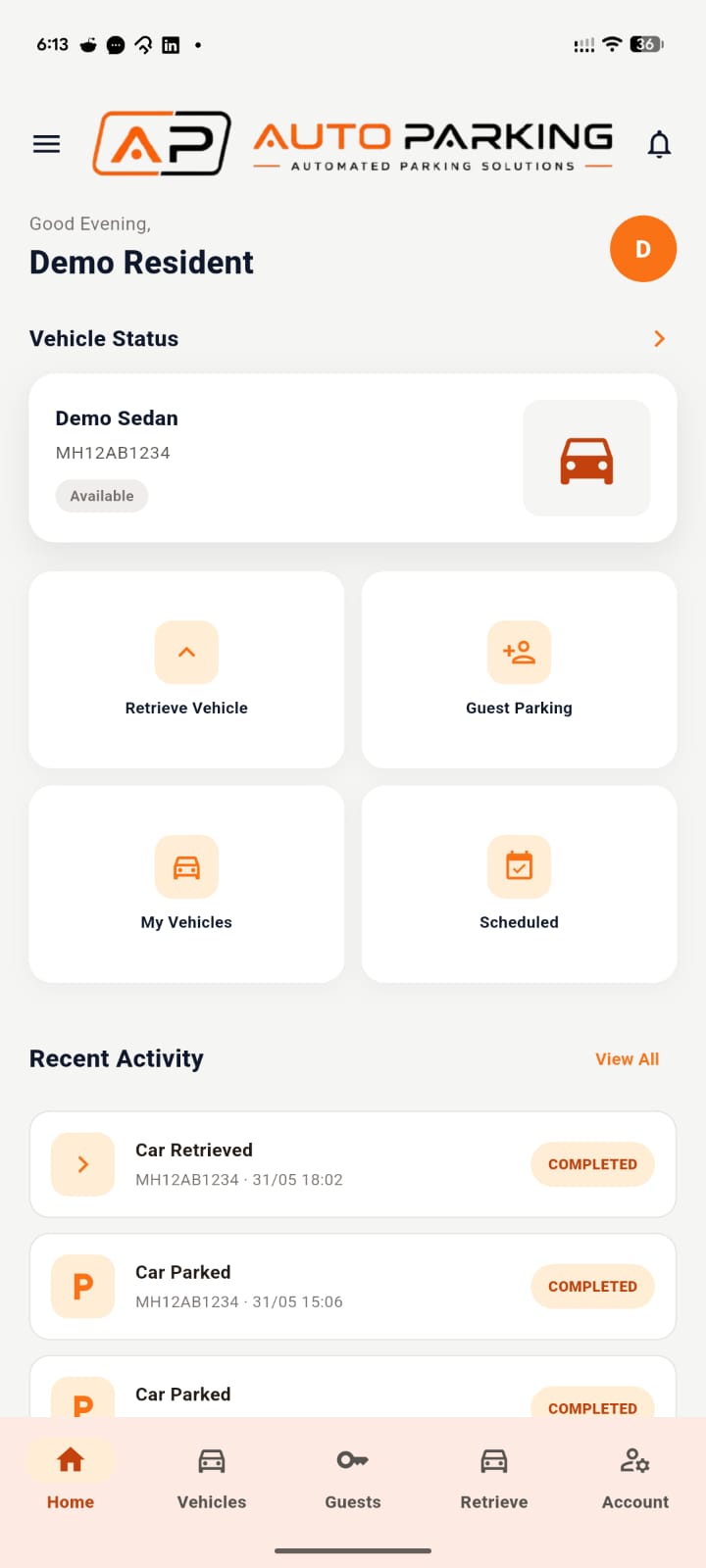
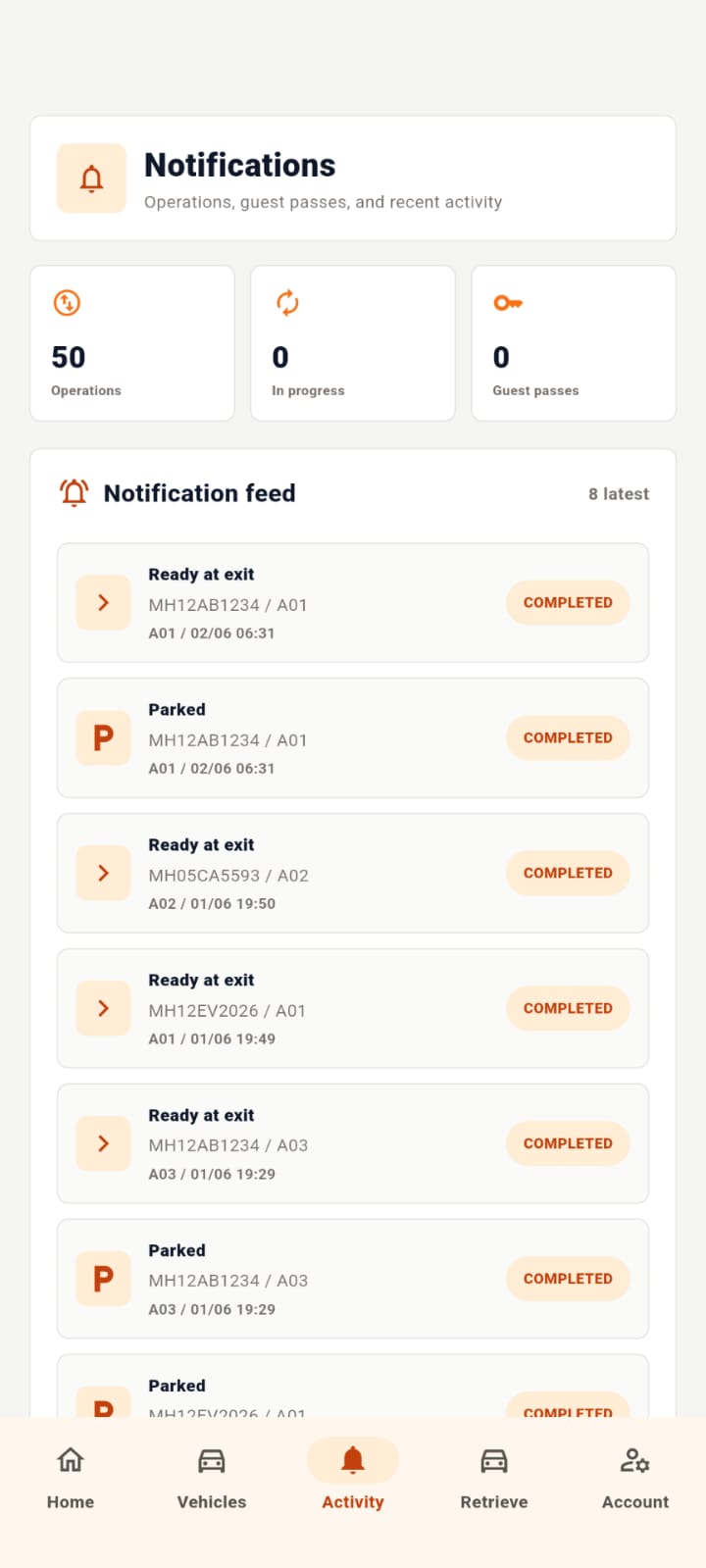
The kiosk focuses on fast entry and retrieval. The resident app focuses on self-service. The admin console focuses on visibility, health, sessions, and operational control.
That separation matters because physical infrastructure software has to stay understandable under pressure. Users should not need to understand the full system just to complete their task.
“The harder the physical workflow, the simpler each software surface needs to feel.”
This project was not publicly deployed, but it remains a strong systems case study because it connects mobile UX, kiosk flows, admin operations, backend architecture, and hardware-ready thinking.